
Walk through a market in Thailand, Vietnam, Indonesia, or the Philippines, and sooner or later you’ll catch a distinctive, sweet, almost vanilla-like aroma drifting from a stall selling desserts, rice dishes, or bundled fresh leaves. That fragrance almost always comes from pandan — one of Southeast Asia’s most cherished culinary and aromatic plants. Long, blade-shaped, and deep green, pandan leaves have flavored everything from sticky rice to custards for generations, and in recent years they’ve also found a welcome place in herbal tea blends, where their gentle sweetness and calming green aroma bring something unmistakably regional to the cup.
Pandan (Pandanus amaryllifolius) is a tropical plant in the screwpine family, native to Southeast Asia and widely cultivated across the region for its fragrant leaves. Unlike many herbs grown for their flowers or roots, it’s the long, ribbon-like leaves of the pandan plant that carry its signature scent — often described as a combination of vanilla, toasted rice, and fresh-cut grass. This aroma comes from a naturally occurring compound that gives pandan its telltale fragrance, one so distinctive that it’s sometimes nicknamed the “vanilla of Southeast Asia.”
For generations, pandan has held a place at the center of Thai and broader Southeast Asian households, used to wrap and flavor rice before steaming, infused into coconut milk for desserts, and steeped into fragrant drinks served both hot and cold. Its role goes beyond flavor — in many households, the scent of pandan is deeply tied to memories of home cooking, festive meals, and family gatherings, giving it a comforting, nostalgic quality that few other herbs can match.
From Kitchen Staple to Calming Tea Ingredient
While pandan is best known in the West as a dessert flavoring, its use as a calming beverage ingredient has a long history within Thai herbal tradition. Pandan leaf tea, often brewed on its own or blended with other botanicals, has traditionally been enjoyed as a soothing, naturally sweet drink to sip in the evening or after a meal. Its mellow, slightly earthy sweetness makes it a natural complement to more floral herbs like chamomile or butterfly pea, rounding out a blend with a warm, comforting undertone rather than competing with sharper flavors.
In traditional practice, pandan has often been associated with a sense of everyday comfort — the kind of familiar, homely aroma that many people in the region grew up with. It’s this quality that makes pandan such a fitting addition to a bedtime blend: rather than being an unfamiliar “exotic” ingredient, for many people it evokes the same feeling as a favorite home-cooked dish, something inherently relaxing and grounding to sip in the evening.
Pandan is naturally caffeine-free, which is part of why it fits so naturally into evening tea blends meant to be enjoyed close to bedtime. Its gentle sweetness also means that pandan-based teas often need little to no added sugar or honey, making them a pleasant option for those who prefer a naturally mild, subtly sweet cup rather than something bold or bitter.
How to Brew and Enjoy Pandan Tea
Pandan leaves can be used fresh, dried, or as cut pieces in tea blends. When using dried pandan, steep it in water just off the boil — around 90°C — for about 5 to 7 minutes to allow its aroma to fully infuse the water. The resulting tea has a pale, straw-colored hue and a fragrance that’s often described as comforting rather than intensely flavored, making it an easy tea to enjoy plain or blended with other herbs.
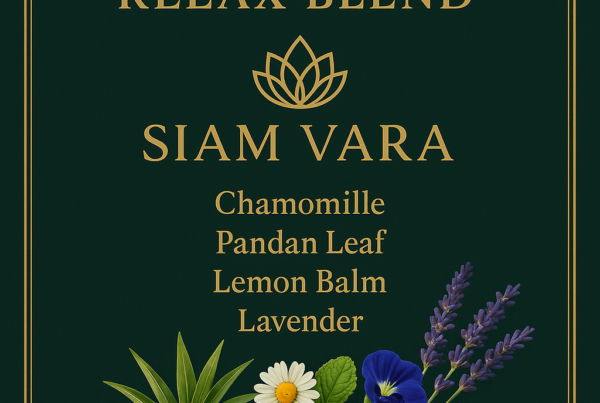
Because of its naturally sweet, aromatic profile, pandan works particularly well as a base note in mixed herbal blends. It’s commonly paired with chamomile, lemon balm, and other calming botanicals to build a rounder, more complex evening tea — a role it plays in blends like Siam Vara’s Sleep & Relax pyramid tea bags, where pandan’s warm sweetness helps balance the more floral and citrus notes of the other herbs in the mix. This kind of pairing reflects a broader trend in modern herbal tea: taking a traditional, deeply regional ingredient like pandan and placing it alongside other well-loved calming herbs from around the world.
As an evening ritual, brewing pandan tea can be a small act of connecting to tradition, especially for those with ties to Southeast Asian food culture. The gentle steam, the familiar sweet aroma, and the soft green color of the finished tea all contribute to a sense of quiet comfort — a fitting way to close out the day, one warm sip at a time.