
Herbal tea has a long history, but many people still come to it with a handful of the same basic questions — especially if they are used to regular tea or coffee and are trying caffeine-free botanicals for the first time. Below are some of the most common questions, answered in plain terms.
Is herbal tea actually “tea”? Technically, no. True tea comes from the Camellia sinensis plant, which is where caffeine in black, green, oolong, and white teas originates. What we call “herbal tea” is more accurately a tisane — an infusion of herbs, flowers, leaves, or fruit that contains no actual tea leaf at all. That is precisely why herbal blends like chamomile, lavender, or pandan-based teas are naturally caffeine-free: there was never any caffeine-containing plant material in the bag to begin with.
Does caffeine-free mean it has no effect at all? Not exactly. While herbal tea does not contain a stimulant like caffeine, that does not mean drinking it is a neutral, effect-free experience. The warmth of the beverage, its aroma, and the simple act of pausing to drink something slowly all contribute to a subjective feeling of calm. Individual herbs also carry their own traditional associations — chamomile and lavender, for instance, are widely used in evening routines precisely because of their long-standing reputation for promoting relaxation, even though this is a general wellness association rather than a guaranteed physiological effect for every person.
Can I drink herbal tea any time of day, or only at night? Because it is caffeine-free, herbal tea does not carry the same “avoid it after 2pm” advice that applies to coffee. Many people do drink calming blends specifically in the evening because the ritual pairs naturally with winding down, but there is nothing stopping you from enjoying a cup in the afternoon if you simply like the flavor or want a break from your day.
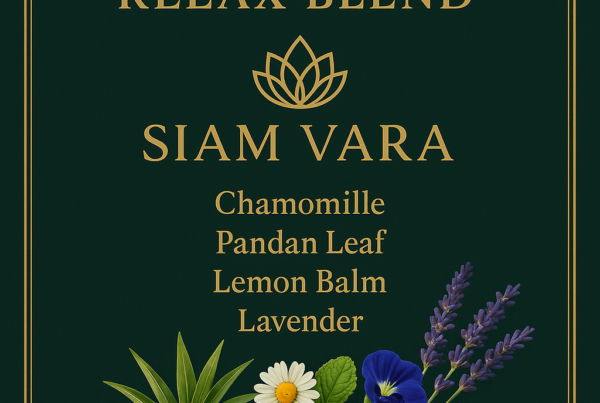
Will it taste like “health food”? This is a common worry, but a well-made multi-herb blend is designed with flavor in mind, not just function. Chamomile brings a soft, apple-like floral note; pandan adds a naturally sweet, almost vanilla-adjacent aroma; lemon balm contributes a light citrus brightness; lavender offers a distinct floral perfume; and butterfly pea contributes more color and gentle earthiness than sharp flavor. Together, a good blend tends to taste rounded and pleasant rather than medicinal.
Practical Preparation Questions
How long should I steep it? Most herbal blends in pyramid bags do well with three to five minutes of steeping in freshly boiled water, though you can adjust to taste — steeping longer generally produces a stronger, more concentrated flavor, while a shorter steep gives a lighter cup. There is no strict rule here; it comes down to personal preference.
Can I reuse a tea bag for a second cup? You can, though the second steep will usually be noticeably milder than the first, since much of the flavor and aroma is released during the initial infusion. Some people enjoy this lighter second cup later in the evening, while others prefer a fresh bag each time for a fuller flavor.
Is it safe for kids, or during pregnancy? This varies by individual herb and personal health circumstances, so it is not something to answer with a blanket “yes” or “no.” Ingredients like lavender and chamomile are widely used, but anyone who is pregnant, nursing, managing a medical condition, or preparing tea for a child should check with a doctor or pediatrician first, since sensitivities and appropriate guidance can differ from person to person.
Does herbal tea expire? Dried herbs do not spoil in the way fresh food does, but they gradually lose potency and aroma over time. Storing tea bags in a cool, dry place away from direct sunlight helps preserve flavor for longer, and checking the packaging for a best-by date is a reasonable habit before assuming a box is still at its freshest.
Taken together, these answers point to a simple conclusion: caffeine-free herbal tea is a flexible, low-risk addition to most people’s routines, with the usual caveats that apply to any ingredient — check what is actually in the blend, and check with a professional if you have specific health questions.