
Walk down any wellness aisle and you will find no shortage of teas promising calm, comfort, and better sleep. The packaging tends to look similar — soft colors, moons, and words like “relax” printed generously across the box. But not all sleep-oriented herbal blends are built the same way, and knowing what to actually look for on the label can make the difference between a tea you enjoy nightly and one that sits half-used in the cupboard.
The first thing worth checking is the ingredient list itself, and specifically whether it lists real, named botanicals rather than vague “herbal blend” language with no specifics. A blend that names its components — chamomile, lemon balm, lavender, and so on — gives you the ability to know exactly what you are drinking and to check each ingredient against your own sensitivities or preferences. If a product is cagey about what is actually inside the bag, that is worth treating as a caution flag rather than a minor detail.
Second, look closely at whether the tea is genuinely caffeine-free. This sounds obvious, but some “relax” or “evening” blends still include small amounts of green or black tea leaf for flavor or bulk, which introduces caffeine into a product marketed for bedtime use. A true herbal tisane — meaning it contains no tea leaf at all, only herbs, flowers, and botanicals — avoids this problem entirely and is the safer choice if your goal is genuinely winding down rather than getting a mild stimulant boost disguised in a calming wrapper.
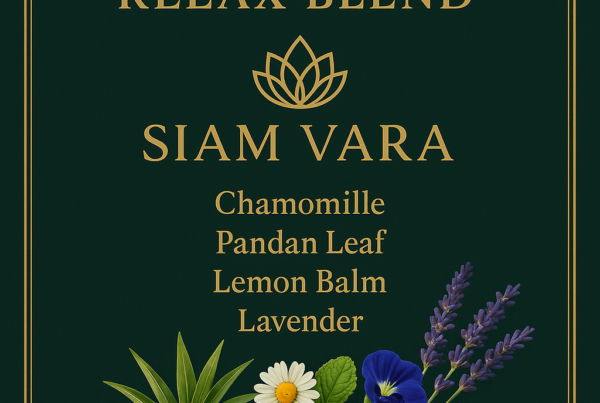
Third, consider whether the blend combines multiple complementary herbs or relies on just one. Single-herb teas, like plain chamomile, are simple and reliable, but multi-herb blends can offer a more layered experience — both in flavor and in the range of traditional botanicals involved. A well-designed five-herb blend, for instance, might combine chamomile for its familiar floral calm, pandan for a naturally sweet, grassy aroma rooted in Southeast Asian tradition, lemon balm for its light citrus note, butterfly pea for both color and a mild earthiness, and lavender for its distinctive floral fragrance. The result is a more rounded sensory experience than any single herb offers alone.
Checking the Practical Details
Beyond the ingredients themselves, pay attention to how the tea is packaged and processed. Pyramid-style tea bags, as opposed to flat paper bags, generally allow more room for whole or larger-cut herb pieces to expand and release their aroma and flavor during steeping, which often makes for a fuller cup. It is a small design detail, but one that affects your actual experience with the product every single night.
It is also worth checking for the absence of artificial colors and preservatives. Butterfly pea, for example, naturally produces a striking blue color that shifts toward purple with a splash of citrus — there is no need for artificial dye to achieve a visually appealing cup, and a brand relying on real butterfly pea flower rather than synthetic coloring is generally a good sign of overall ingredient quality. Similarly, herbal teas that rely on proper drying and packaging rather than chemical preservatives tend to reflect a more straightforward, less processed product.
Net weight and bag count matter more than they might seem to at first glance, too. A box listing something like 15 pyramid tea bags at 30 grams total gives you a clear sense of how long the box will actually last at one cup a night, which helps you compare value across brands rather than guessing from packaging size alone.
Matching the Blend to Your Routine
Finally, think about how the tea fits into your actual evening, not just how it reads on a shelf. A tea meant to be part of a wind-down ritual should be easy to prepare without fuss — steep, wait a few minutes, sip — because a complicated process defeats the purpose of something meant to be relaxing. Brands such as Siam Vara, which build their Sleep & Relax blend around this exact combination of chamomile, pandan, lemon balm, butterfly pea, and lavender in caffeine-free pyramid bags, are examples of how these details come together into a single, repeatable evening habit rather than a novelty purchase.
In the end, choosing a sleep and relax blend is less about finding a magic formula and more about finding a tea whose ingredients you trust, whose flavor you actually enjoy drinking night after night, and whose preparation fits naturally into the last hour before you turn in. Get those three things right, and the rest of the ritual tends to follow on its own.