
Thailand’s landscape is often described as a living pharmacy of sorts, though that phrase undersells how ordinary and integrated these plants actually are in daily life. Walk through a Thai market, a home garden, or even a roadside stall, and you will likely encounter a cluster of familiar botanicals—lemongrass, ginger, pandan, holy basil, butterfly pea, and more—each carrying its own story within Thai household tradition.
These plants were never treated as exotic specialties. They were, and remain, everyday ingredients: added to soups, brewed into drinks, woven into decorations, or simply grown along a fence for convenience. This familiarity is part of what makes Thai herbal culture so approachable. The knowledge wasn’t locked away in specialized institutions; it lived in ordinary homes, passed casually from one generation to the next.
Chamomile, though more associated globally with European herbal tradition, has found a comfortable place in the broader landscape of calming botanicals used across many wellness cultures, including in modern Thai blends. Its soft, apple-like aroma and pale golden color have made it a natural pairing partner for Southeast Asian herbs, especially in evening-oriented infusions where a gentle, mellow character is desired.
Pandan leaves, on the other hand, are unmistakably Thai. Recognizable by their long, blade-like shape and distinctive sweet, grassy fragrance, pandan appears everywhere in Thai life—from desserts and rice dishes to, increasingly, herbal teas. Traditionally, pandan has been associated with comfort and homeliness; its scent alone can evoke the feeling of a Thai kitchen, making it a natural anchor for a calming evening blend.
Lemon Balm, Butterfly Pea, and Lavender: A Cross-Cultural Bouquet
Lemon balm brings a light, citrusy freshness that has long been valued in herbal traditions for its gentle, soothing character. While its roots trace back to Mediterranean herbalism, it blends beautifully with Thai botanicals, offering a bright note that balances heavier, sweeter aromatics like pandan.
Butterfly pea flower is perhaps one of Thailand’s most visually striking botanicals. Its deep indigo-blue petals have been used for generations in Thai kitchens, most famously to naturally color rice, desserts, and drinks without any artificial dye. Beyond its beautiful hue, butterfly pea has a mild, earthy flavor that plays well as a base note in herbal blends, quietly rounding out sharper or sweeter herbs around it.
Lavender, though not native to Thailand, has become a well-loved addition to many contemporary Thai wellness products. Its familiar floral aroma is widely associated with relaxation and calm evenings around the world, making it a natural complement to the more traditional botanicals in a Thai-inspired blend.
A Blend That Reflects Thai Botanical Philosophy
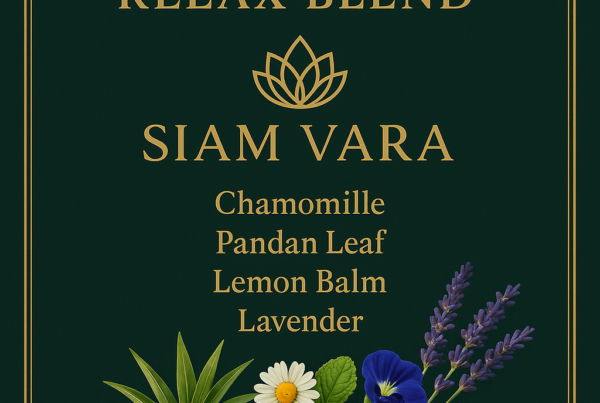
What ties these herbs together isn’t a single formula passed down unchanged for centuries, but a broader philosophy: that plants grown with intention, combined thoughtfully, and prepared simply can support a sense of ease at the end of the day. This is the same philosophy reflected in Siam Vara’s Sleep & Relax Blend, which brings together chamomile, pandan, lemon balm, butterfly pea, and lavender in a single caffeine-free pyramid bag—each herb contributing its own note to a rounded, calming whole.
Learning about these botanicals is a small window into Thai culture itself: resourceful, sensory, and deeply attuned to what grows nearby. Even if you never visit a Thai herb garden in person, understanding the story behind each leaf and petal in your cup adds a layer of appreciation to what might otherwise be just another warm drink before bed.