
“Natural ingredients” and “no preservatives” are two phrases that show up on a lot of packaging these days, sometimes so often that they start to feel like background noise rather than meaningful claims. But when it comes to herbal tea specifically — something you are steeping directly in hot water and drinking regularly, often as part of a nightly routine — what is and isn’t in the bag actually matters in a fairly direct way, and it is worth understanding why.
Herbal tea, at its core, is a simple product: dried herbs, flowers, or leaves, packaged and later infused in hot water. There is no cooking process, no chemical extraction, and typically no added flavoring needed if the underlying botanicals are good quality. This simplicity is part of the appeal, but it also means that anything added beyond the herbs themselves — artificial colors, synthetic flavoring, chemical preservatives — stands out more, both in terms of what you are actually drinking and in terms of what the addition suggests about the underlying ingredient quality.
Take color as a specific example. Butterfly pea flower naturally produces a vivid blue color when steeped, one that shifts toward purple or pink with the addition of something acidic like lemon. This is simply what the flower does — no dye required. If a tea claiming to contain butterfly pea produces a color that seems artificially uniform or unusually vibrant compared to what the flower naturally achieves, or if the ingredient list includes artificial color additives alongside it, that is worth noticing. A tea that lets its natural ingredients do the visual work, rather than leaning on synthetic dye, is generally a sign of a more straightforward, less processed product.
Preservatives raise a similar consideration. Dried herbs are, by nature, a fairly shelf-stable product already — removing moisture is itself a traditional preservation method that humans have relied on for centuries. A well-dried, properly packaged herbal tea does not typically need chemical preservatives to stay fresh for a reasonable shelf life; it needs good drying, clean processing, and appropriate packaging that protects the herbs from moisture and light. When a product avoids added preservatives, it is often a reflection of a simpler overall production process rather than a cut corner.
Why This Matters for a Nightly Habit
These details carry a bit more weight when you consider that a sleep and relax tea is, by design, meant to be a repeated, nightly habit rather than an occasional treat. Something you drink once a month barely registers in terms of overall dietary exposure to any additive, artificial or otherwise. Something you drink every night for months is a different story — small choices about ingredient quality accumulate over time, simply because of frequency. This is part of why people building a nightly tea ritual tend to pay closer attention to ingredient lists than they might for an occasional specialty drink.
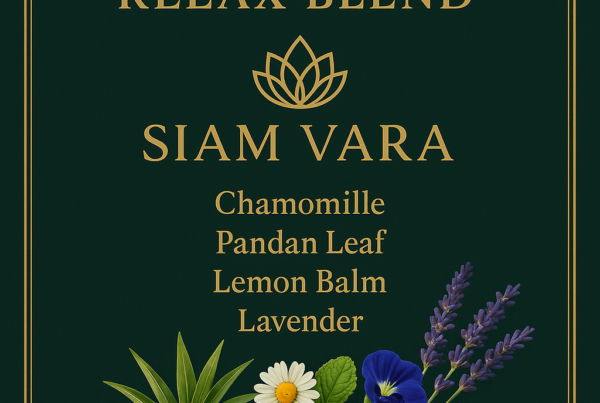
There is also a simple trust factor at play. A short, recognizable ingredient list — just the names of the herbs themselves, nothing else — is easy to evaluate. You can look at “chamomile, pandan, lemon balm, butterfly pea, lavender” and know precisely what you are drinking each night, check each one against your own sensitivities, and feel confident about what is actually in your cup. A long list of additional additives makes that kind of evaluation much harder, and for a product meant to be part of a calming, trustworthy ritual, that added complexity works against the whole point.
None of this means every product with an added ingredient is automatically inferior, or that “natural” alone guarantees quality — natural ingredients still need to be sourced and processed well to actually taste good and remain fresh. But when comparing options for a nightly tea habit, a short ingredient list built entirely around real, named botanicals, without artificial color or preservatives, gives you a clearer, more transparent picture of exactly what you are drinking, night after night, which is exactly the kind of clarity worth prioritizing in something you plan to make a long-term habit.
A simple habit worth building is actually reading the ingredient panel before adding any new tea to your nightly rotation, rather than relying on front-of-box marketing language alone. Front labels are designed to sell; the ingredient list is where the actual contents are disclosed. If the list reads like a short, recognizable set of herb names, that is generally a good sign for a product meant to be part of a calm, trustworthy bedtime ritual, and a small habit of checking it is an easy way to stay consistent with that priority over time.