
In conversations about wellness, so much attention goes to specific compounds, nutrients, and ingredients that we often overlook something much simpler and, in its own quiet way, just as valuable: the basic act of drinking a warm beverage, slowly, with intention. Hydration, physical comfort, and personal ritual are three underrated benefits of a warm drink like herbal tea, and none of them require any exotic ingredient or bold health claim to be genuinely worthwhile parts of daily life.
Start with hydration, which is often treated as an afterthought but is genuinely foundational to how the body functions day to day. Many people struggle to drink enough fluids simply because plain water can feel unappealing or easy to forget, especially across a long, busy day. A flavorful, aromatic herbal tea offers a genuinely enjoyable alternative, since it is fundamentally water with natural botanical flavor infused into it, containing no caffeine to counteract its hydrating effect. For someone who finds it hard to reach for a plain glass of water, a warm cup of naturally flavored tea can make staying hydrated feel like a small pleasure rather than a chore to check off a list.
The Physical Comfort of Warmth
There is also something genuinely soothing about physical warmth itself, independent of anything a drink contains. Cupping a warm mug in both hands on a cold evening, or simply feeling warmth spread through your body after a long day, taps into a very basic, almost primal sense of comfort. This is not a mysterious or complicated effect; it is simply how humans have long responded to warmth, and it is part of why warm drinks in general, tea, broth, warm milk, have such a long history across nearly every culture as comfort beverages, particularly in the evening or during colder seasons.
This physical comfort pairs naturally with the slower pace that a warm drink tends to encourage. You cannot gulp down a hot cup of tea the way you might down a cold glass of water; the temperature forces you to slow down, sip gradually, and pause between sips while the tea cools slightly. That built-in slowness is, in its own subtle way, a small act of enforced mindfulness in an otherwise fast-paced day, giving your mind a brief window to rest even if you are not consciously trying to meditate or relax.
Ritual as a Genuine Wellness Tool
Ritual, though harder to quantify than hydration, may be the most powerful of these three benefits. Humans respond strongly to repeated, predictable patterns of behavior, and a consistent evening tea ritual can become a genuine psychological cue that signals to your mind and body that the day is transitioning toward rest. The specific steps, filling the kettle, waiting for the water to heat, choosing a tea bag, watching the color bloom in the cup, breathing in the aroma before the first sip, together form a small, repeatable sequence that many people come to associate strongly with winding down.
This kind of ritual-based benefit is well recognized in general wellness and behavioral literature, even setting aside anything specific to tea itself: consistent, calming pre-bedtime routines are generally considered helpful for easing the transition from an active day into rest. A warm cup of caffeine-free herbal tea fits naturally into that kind of routine, offering a screen-free, low-stimulation activity to do with your hands and attention in the final stretch of the evening, in contrast to scrolling a phone or watching television right up until bedtime.
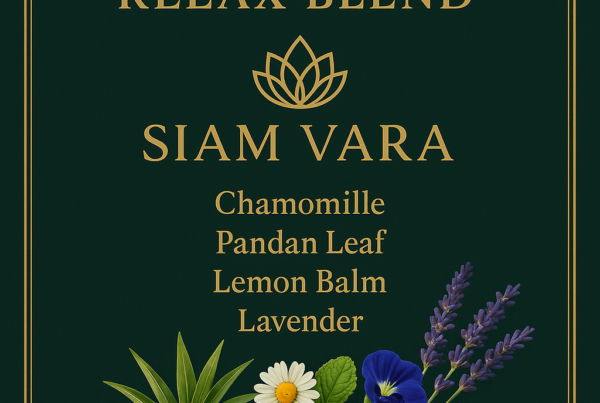
It is worth being honest that much of this benefit comes from the ritual and the warmth themselves, rather than from any single miracle ingredient in the cup. That honesty does not diminish the value of the habit; if anything, it makes the habit more accessible, since it means almost anyone can benefit from building a warm-drink ritual into their evening, regardless of which specific tea they prefer. A caffeine-free blend such as Siam Vara’s Sleep & Relax Blend, made with chamomile, pandan leaves, lemon balm, butterfly pea, and lavender, is well suited to this kind of evening ritual precisely because it can be enjoyed without any concern about disrupting sleep, letting the warmth, the aroma, and the slow pace of the ritual do much of the quiet work.
None of this is meant to suggest that a cup of tea will single-handedly solve sleep difficulties or chronic stress; those are complex issues that sometimes warrant a conversation with a healthcare professional. But as an accessible, low-cost, genuinely pleasant daily habit, the combination of hydration, physical warmth, and consistent ritual that a warm drink provides is a legitimate, underrated form of everyday self-care, worth appreciating for exactly what it is.