
Thailand’s geography reads almost like a checklist for botanical diversity: tropical rainforests in the south, mountainous terrain in the north, fertile river plains through the central region, and a long coastline stretching along two seas. This range of climates and elevations has given rise to an extraordinary variety of plant life, much of which has found its way, in one form or another, into Thai kitchens and herbal traditions.
Northern Thailand, with its cooler mountain climate, has historically supported different botanicals than the hot, humid south. Meanwhile, the central plains—long known as agricultural heartland—have provided ideal growing conditions for aromatic plants like pandan and lemongrass. This regional variation means that Thai herbal tradition was never a single, uniform practice; it developed differently across the country, shaped by whatever grew best in each local environment.
Butterfly pea, for instance, thrives readily in Thailand’s warm climate and is commonly found climbing along fences and garden trellises throughout the country. Its resilience and ease of cultivation likely contributed to its widespread use in Thai households, where it became valued not only for its striking color but also for how conveniently it could be grown at home.
Pandan, similarly, grows abundantly across much of Thailand, thriving in the warm, humid conditions found in gardens nationwide. Its ubiquity is part of why its scent feels so distinctly and universally Thai—it isn’t a rare or specialty plant, but something many households could grow easily just outside the kitchen door.
A Landscape That Encourages Experimentation
This abundance and diversity of local plant life likely encouraged a spirit of experimentation within Thai herbal culture. With so many aromatic options readily available, households had the freedom to combine different botanicals based on preference, availability, and what simply smelled or tasted good together, rather than adhering to a single fixed formula.
This experimental spirit is part of what makes Thai herbal tea culture feel so alive and varied even today. Rather than a rigid, standardized tradition, it reflects centuries of small, informal experimentation across countless households and regions, each contributing their own preferences to the broader pool of herbal knowledge.
Biodiversity as the Foundation of a Modern Blend
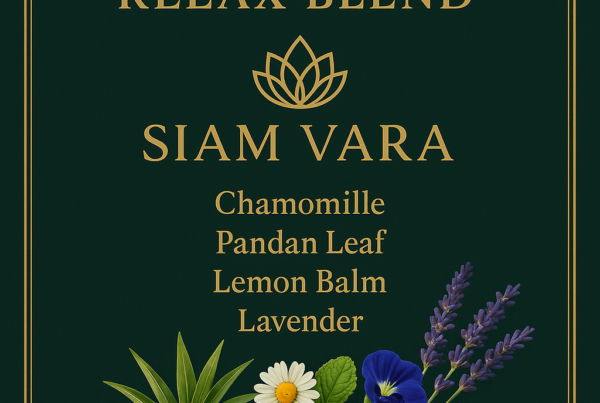
When botanicals from different origins are brought together in a single tea blend, it’s worth remembering that this kind of combination has deep roots in exactly the environment that made it possible in the first place. A blend featuring chamomile alongside distinctly Thai botanicals like pandan and butterfly pea reflects not just a modern formulation choice, but a broader story about how Thailand’s fertile, varied landscape has long supported this kind of botanical mixing and matching.
Appreciating the biodiversity behind Thai herbal tea adds another layer of meaning to the experience of drinking it. Each ingredient—the pandan leaf, the butterfly pea flower, the herbs steeped alongside them—represents a small piece of Thailand’s rich natural landscape, made accessible in a warm cup rather than requiring a trip through a rainforest or mountain garden to encounter.
In this sense, a cup of Thai-inspired herbal tea is also, quietly, a cup of geography and ecology. It carries a trace of the specific climates, soils, and growing conditions that allowed these particular plants to flourish in the first place, offering drinkers a small, sensory connection to a landscape many of them may never have the chance to visit directly.