
Most advice about evening routines focuses on a long list of things to do: dim the lights, put away screens, stretch, journal, meditate. For many people, that list feels overwhelming rather than relaxing, which somewhat defeats the purpose. One practical alternative is to build your evening routine around a single anchor habit — something simple and enjoyable enough that you’ll actually stick with it — and let the rest of the routine form naturally around it. For many people, a warm cup of tea makes an excellent anchor.
An anchor habit works because it gives your routine a fixed point to organize around, rather than requiring you to remember and execute a long checklist every night. If your anchor is “make a cup of tea after dinner,” everything else can loosely attach itself to that moment: you might dim the lights just before you put the kettle on, put your phone away while it steeps, and sit somewhere comfortable while you drink it. The tea becomes the thread that ties the rest of the routine together.
The physical process of making tea also naturally builds in a pause. Boiling water takes a few minutes; steeping takes several more. During this time, there’s little to do but wait, which creates a small window for your mind to shift away from the tasks and pressures of the day. Many people find that this brief, unhurried pause is one of the more valuable parts of the entire routine, independent of the tea itself.
Designing Your Own Tea-Centered Routine
A useful way to build a tea-centered evening routine is to think of it in three simple stages: before, during, and after. Before making the tea, consider lowering the lighting in your space and putting away work-related devices — this signals the start of your wind-down period. During the tea itself, try to be as present as possible: sit somewhere comfortable, avoid multitasking, and simply notice the warmth, aroma, and flavor. After finishing your tea, transition into a final calming activity, such as reading, light stretching, or simply preparing for bed.
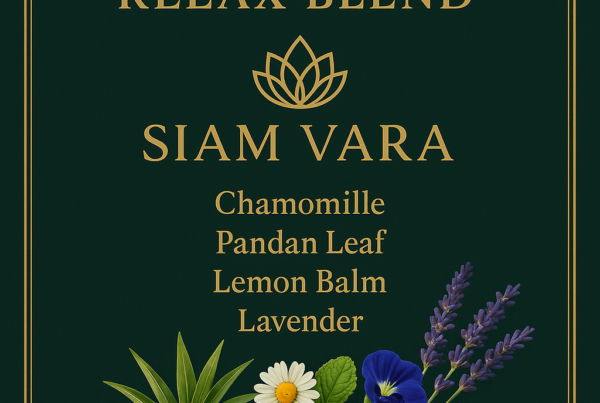
The specific herbal tea you choose can support this process. A caffeine-free blend designed for evening use — such as one combining chamomile, pandan leaves, lemon balm, butterfly pea, and lavender, like Siam Vara’s Sleep and Relax blend — offers a pleasant sensory experience (the earthy sweetness of pandan, the floral notes of chamomile and lavender) without the risk of caffeine interfering with your ability to fall asleep later. The distinctive natural blue-purple hue that butterfly pea can lend to a tea also makes the ritual feel a little more special, which can help reinforce the habit simply because it’s enjoyable to look forward to.
Consistency matters more than perfection here. You don’t need to complete every stage flawlessly every night — some evenings will be rushed, and that’s fine. The goal is to have a routine simple enough that you can return to it easily, even after an off night, rather than a rigid ritual that falls apart the moment life gets busy.
Common Pitfalls to Avoid
One common mistake is drinking tea while still actively working, scrolling on a phone, or watching something stimulating. In this case, the tea itself may be caffeine-free and calming in principle, but the surrounding context undermines much of its potential benefit. To get the most out of a tea-centered routine, try to treat the tea-drinking period as a small, protected block of time, separate from screens and tasks.
Another pitfall is choosing a tea that isn’t genuinely caffeine-free, which can work against the very goal of the routine. Checking labels and ingredient lists is a simple but important step, particularly since some “tea” products blend herbal ingredients with actual caffeinated tea leaves.
Finally, it helps to keep expectations realistic. A relaxing evening tea routine is a supportive habit, not a guaranteed solution to every sleep difficulty. Many people find that it makes their evenings feel calmer and more intentional, and that this sense of calm, over time, becomes a genuinely valuable part of how they close out each day — quite apart from whatever specific effect it may or may not have on falling asleep.