
Thailand’s wellness heritage extends well beyond tea, encompassing practices like traditional Thai massage, herbal compress therapy, and aromatic steam treatments that have been part of community life for generations. While these practices differ in method, they share a common thread: an emphasis on using natural, locally available botanicals to support a sense of balance and calm at the end of the day.
One of the clearest examples is the traditional herbal compress, known in Thai as “luk pra kob,” a bundle of aromatic herbs wrapped in cloth, warmed, and used during massage. These compresses often combine botanicals valued for their soothing fragrance, blending plants like lemongrass, turmeric, and various leaves into a single fragrant bundle. The idea of combining multiple herbs into one holistic experience—rather than relying on a single “hero” ingredient—is a recurring theme throughout Thai wellness culture.
This same philosophy of blending appears in traditional Thai herbal steam rooms, where a mix of aromatic plants is added to hot water, releasing fragrant steam meant to accompany a moment of rest and unwinding after physical activity. Again, the emphasis isn’t on a single powerful ingredient, but on a thoughtful combination that works together to create an overall sense of ease.
It’s this multi-herb, holistic approach that has quietly shaped how many modern Thai herbal tea blends are formulated. Rather than isolating one “star” botanical, contemporary blends often draw on this same tradition of combining several complementary herbs, each contributing a different note to the overall experience—much like a compress or steam blend brings multiple plants together for a unified effect.
From Touch and Steam to a Cup of Tea
Translating hands-on wellness practices like massage and herbal compresses into a simple beverage required a shift in format, but not necessarily in philosophy. Where a compress might use warmth and pressure to deliver a fragrant, herb-infused experience, a tea blend delivers something similar through aroma and taste, steeped gently in hot water and enjoyed slowly.
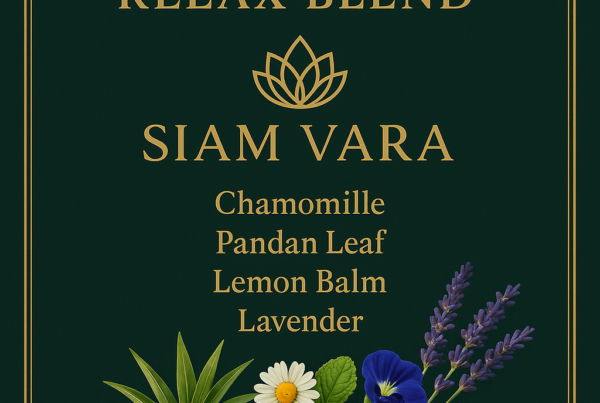
This is precisely the thinking behind Siam Vara’s Sleep & Relax Blend, which brings together five different botanicals—chamomile, pandan leaves, lemon balm, butterfly pea, and lavender—into a single pyramid tea bag. Rather than choosing one herb and building a product entirely around it, the blend reflects the same layered, multi-botanical approach found in traditional Thai wellness practices, where several gentle elements work together rather than a single ingredient working alone.
An Evening Ritual Rooted in Old Wisdom
What makes this connection meaningful is that it isn’t purely aesthetic or marketing-driven. Thai wellness culture has, for generations, leaned toward combining natural elements thoughtfully rather than relying on isolated compounds, and modern herbal tea blends that follow this same principle are, in a real sense, continuing an established cultural pattern rather than inventing something new.
Of course, a cup of tea is a much gentler, more accessible ritual than a full herbal massage or steam session—something that fits easily into a quiet evening at home rather than requiring a dedicated wellness visit. But the underlying spirit remains connected: a caffeine-free moment built around fragrant, natural botanicals, intended to accompany the transition from a busy day into a restful evening.
Seen this way, a modern herbal tea blend isn’t simply inspired by Thai wellness tradition in a vague, decorative sense. It reflects a genuine continuity of approach—layered botanicals, natural ingredients, and an emphasis on gentle, holistic comfort—translated from centuries-old practices into a format suited for a modern nightstand rather than a traditional treatment room.