
In many Thai communities, the local temple has long been more than a place of worship. Historically, Buddhist temples in Thailand often served as centers of community life—places where knowledge was shared, gardens were tended, and traditional wellness practices were quietly passed along. Among the many roles temples played, cultivating medicinal and aromatic plants was a common one, with herb gardens sitting alongside the more familiar temple grounds.
Thai herbal tradition holds that monks and temple caretakers often maintained small gardens of useful plants—not for grand ceremony, but for practical, everyday purposes. These gardens might include soothing leaves for tired travelers, fragrant flowers for offerings, or aromatic herbs that found their way into simple drinks shared with visitors. Over time, this quiet cultivation became part of the fabric of temple life across the country.
It’s worth noting that much of this history exists more as living folklore and community memory than as precisely documented record. Thai herbal culture was rarely written down in formal texts accessible to ordinary people; instead, it survived through practice—elders teaching younger generations which plants to grow, how to dry them, and when to use them. This oral, hands-on transmission is part of what gives Thai herbalism its warm, communal character.
From these temple and village gardens, herbal knowledge gradually moved into the wider community. A visitor who learned about a soothing leaf from a temple caretaker might bring a cutting home to plant in their own yard. A recipe for a calming evening drink might be shared between neighbors after a chance conversation. In this way, herbal wisdom spread not through institutions, but through everyday human connection.
The Household as Keeper of Tradition
While temples played their part, it was really the Thai household that became the primary keeper of herbal tradition over time. Kitchens across the country doubled as informal apothecaries, with dried herbs stored in jars, tins, and cloth pouches, ready to be steeped whenever needed. A grandmother’s advice about which leaf to boil for a restless night carried as much weight, in practice, as anything written in a formal guide.
This household-centered tradition explains why Thai herbal culture feels so intimate and personal, even today. It wasn’t handed down through grand institutions but through small, quiet acts of care—someone preparing a warm drink for a tired family member, or offering a fragrant cup to a guest as a gesture of hospitality.
Carrying the Tradition Forward
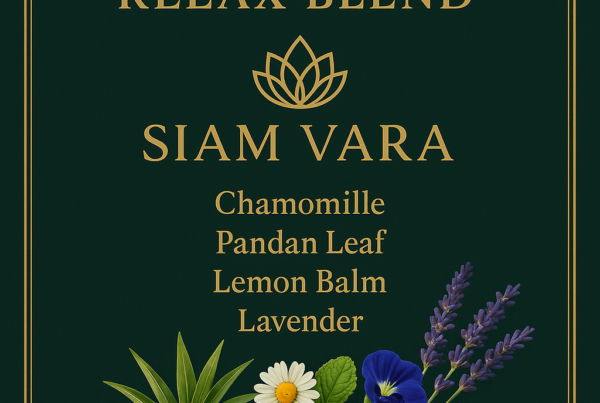
Modern Thai wellness brands often look back to this lineage—temple gardens, village plots, and family kitchens—as a source of inspiration rather than a strict blueprint. Siam Vara, for example, positions its herbal blends within this same spirit of everyday, accessible plant wisdom, choosing familiar botanicals like pandan and butterfly pea alongside chamomile and lavender to create something that feels both rooted in Thai tradition and suited to modern life.
Tracing the path from temple gardens to modern teacups offers a gentle reminder that herbal tea culture in Thailand was never about elaborate ceremony. It grew organically, plant by plant, generation by generation, out of practical care and community spirit—qualities that still feel present in a warm cup shared at the end of a long day.
Understanding these roots doesn’t require treating Thai herbalism as an ancient, unchanging science. Instead, it invites a more honest appreciation: a tradition shaped by ordinary people, tending ordinary gardens, doing their best to care for one another through the plants they grew.