
Mention lavender to most people, and the first image that comes to mind is likely a candle, a bath soak, or a small satchel tucked into a drawer. Lavender’s reputation as an aromatherapy staple is well earned — its distinctive floral scent has been used for centuries in perfumes, sachets, and relaxation products. But long before lavender became a fixture of the modern self-care aisle, it had another, quieter role: as a culinary and tea herb, steeped into warm infusions and enjoyed for both its fragrance and its traditional association with calm.
Lavender (Lavandula angustifolia, among other species) is native to the Mediterranean region, where it has grown wild across sun-drenched hillsides for thousands of years. Its name is thought to derive from the Latin “lavare,” meaning “to wash,” a reference to its ancient use in bathing and laundering, where its fragrant oils were prized for both scent and a reputation for cleanliness. Over centuries, lavender cultivation spread throughout Europe, and its use expanded well beyond bathing into cooking, herbal medicine, and eventually tea.
In traditional herbal practice, lavender has long held a reputation as one of the more calming botanicals, often included in evening infusions and relaxation blends across many cultures. Its distinctive, slightly sweet floral aroma — sometimes described as having a subtle woodsy or herbal undertone — is part of what gives lavender its calming association; scent itself plays a powerful role in how we experience relaxation, and lavender’s fragrance has become almost synonymous with the idea of “winding down.”
From Bath Sachets to Bedtime Cups
While lavender is perhaps best known today for aromatherapy products like essential oils and pillow sprays, its use as a tea ingredient has just as long a history. Dried culinary lavender — a milder variety specifically grown for cooking and steeping — has traditionally been added to teas either on its own or blended with other calming herbs, contributing both its floral aroma and a light, slightly sweet flavor with a hint of herbal bitterness.
Many people find lavender tea appealing precisely because it engages more than just taste. The aroma released as the tea steeps is often just as much a part of the experience as the flavor itself, evoking the same sense of calm many associate with lavender-scented candles or lotions, but through the ritual of making and sipping tea rather than through a topical product. This dual sensory appeal — floral scent paired with a warm, comforting drink — is part of why lavender has become such a popular addition to bedtime tea blends.
It’s important to use lavender thoughtfully in tea, however, as its flavor can be quite strong and slightly bitter if over-steeped or used in excess. A little goes a long way, which is why lavender is often used in smaller proportions when blended with milder herbs like chamomile, pandan, or lemon balm — allowing its floral character to come through as an accent rather than overwhelming the cup.
Brewing Lavender Tea the Right Way
To brew lavender tea, use water just off the boil, around 90°C, and steep a small amount of dried culinary lavender buds for about 4 to 6 minutes. Because lavender’s flavor is concentrated, it’s best to start with a smaller quantity than you might use for milder herbs, adjusting to taste in future cups. Steeping lavender alongside chamomile or lemon balm can help balance its floral intensity, producing a smoother, more rounded flavor than lavender brewed entirely on its own.
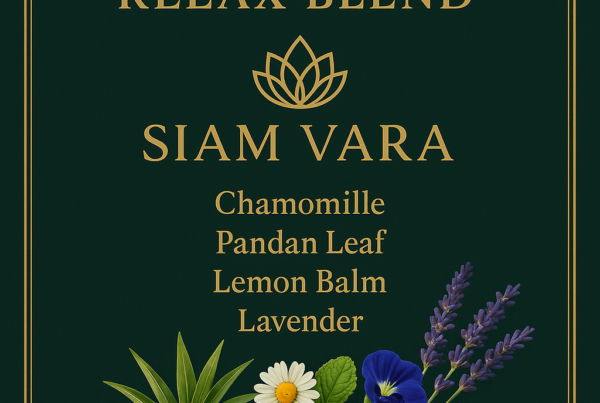
Like the other herbs in this family of calming botanicals, lavender is naturally caffeine-free, making it well suited to an evening cup. In blended teas designed for winding down — such as Siam Vara’s Sleep & Relax pyramid tea bags, which combine lavender with chamomile, pandan, lemon balm, and butterfly pea — lavender typically plays a supporting role, lending its aroma and a light floral note to round out the blend rather than dominating it.
As part of an evening ritual, lavender tea pairs particularly well with other calming habits already associated with the herb: dimming the lights, taking a few slow breaths as the tea steeps, and simply enjoying the fragrant steam rising from the cup. For those who already love lavender in candles or bath products, discovering it in tea form offers a new way to enjoy a familiar, comforting scent — one sip at a time.