
Anyone who has stood in front of a wall of tea boxes has likely noticed two broad categories: single-herb teas, like plain chamomile or plain peppermint, and multi-herb blends that combine several botanicals into one bag. Both approaches have real merit, and understanding the difference can help you choose more intentionally rather than picking whatever box has the nicest label.
Single-herb teas are exactly what they sound like — one botanical, presented on its own. Plain chamomile tea is probably the most familiar example in a sleep-and-relax context, valued for its mild, apple-like flavor and its long tradition of use in evening routines around the world. The appeal of a single-herb tea is its simplicity and predictability: you know exactly what you are getting in every cup, the flavor profile stays consistent, and it is easy to identify if a particular herb does or does not agree with you, since there is nothing else in the bag to complicate the picture.
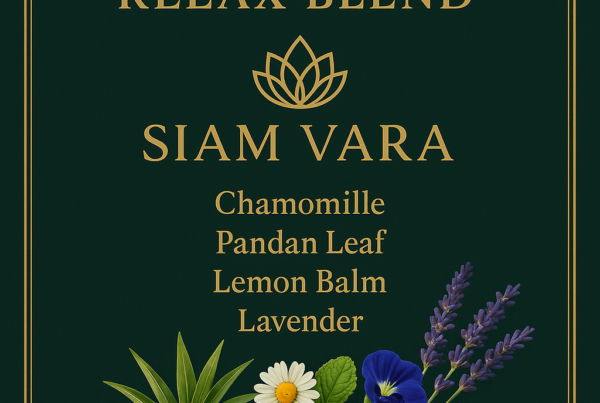
Multi-herb blends take a different approach, combining several botanicals to create a more layered flavor and a broader traditional profile. A blend built around chamomile, pandan, lemon balm, butterfly pea, and lavender, for example, brings together five distinct botanicals, each contributing something different: chamomile’s familiar floral softness, pandan’s naturally sweet and slightly grassy aroma common in Southeast Asian cooking and drinks, lemon balm’s light citrus brightness, lavender’s distinctive floral perfume, and butterfly pea’s striking natural color along with a subtle earthiness. The result is a cup that offers more complexity than any single ingredient could on its own.
Neither approach is inherently “better” — they simply serve different preferences and goals. If you already know you love the taste of chamomile and want nothing else competing with it, a single-herb tea is the straightforward choice. If you enjoy variety, or you are drawn to the idea of a rounder, more layered evening ritual, a well-constructed multi-herb blend offers that in a single cup.
The Case for Multi-Herb Blends
One underrated advantage of multi-herb blends is how they balance out individual herb characteristics that some people find too strong on their own. Straight lavender tea, for instance, can taste quite perfumed and intense to some palates when brewed alone, but blended with other botanicals like chamomile and lemon balm, its floral note becomes one layer among several rather than the dominant flavor. This blending effect often makes multi-herb teas more broadly palatable, even to people who were unsure about one specific herb on its own.
Multi-herb blends can also draw on complementary traditions. Pandan, for example, is a staple aromatic in Southeast Asian cooking and traditional drinks, prized for its natural sweetness and comforting aroma, while chamomile and lavender have a more Western herbal tea tradition behind them. Combining ingredients like these into one blend, as Siam Vara does with its Sleep & Relax formula, creates something that draws on multiple botanical traditions rather than staying within just one, offering drinkers a genuinely distinctive cup rather than a familiar single-note tea.
Choosing What Works for You
If you are new to herbal tea altogether, trying a few single-herb varieties first can be a useful way to learn your own preferences — do you gravitate toward floral notes, citrus brightness, or something more mellow and grassy? Once you have a sense of what you enjoy, a multi-herb blend built around herbs you already like becomes a much easier choice, since you will have a rough idea of what to expect from each component even when they are combined.
For an evening ritual specifically, many people find multi-herb blends more satisfying simply because they offer more to notice and enjoy in each cup — the aroma changes slightly as it cools, the flavor unfolds across a few sips rather than presenting everything at once. Whether you land on a single herb or a five-way blend, the most important factor remains the same: choosing something you genuinely look forward to drinking, since that enjoyment is what makes the ritual sustainable night after night.