
When sleep feels elusive, most people eventually land on one of two aisles: the tea and tisane section, or the supplement shelf where melatonin sits in its little bottles. Both are marketed around the idea of easier, more restful nights, and both have loyal followings. But they are not really competing products in the way advertising sometimes suggests. They belong to different categories entirely, and understanding that difference is more useful than trying to figure out which one “wins.”
Melatonin is a hormone your body produces naturally, primarily in response to darkness, as part of the internal signaling that tells your system it is time to wind down. Melatonin supplements deliver a synthesized or extracted version of that hormone in a measured dose, taken with the intention of nudging your circadian rhythm. Because it works through a specific biological mechanism, timing and dosage matter, and individual responses can vary quite a bit from person to person. It is, in essence, a targeted supplement.
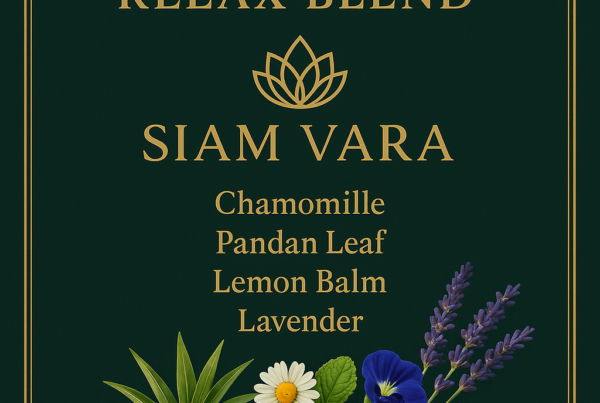
Herbal tea works on a completely different level. A blend like chamomile, pandan, lemon balm, butterfly pea, and lavender does not act on a single hormone pathway the way melatonin does. Instead, it offers a combination of gentle, traditional botanicals alongside the ritual of preparing and drinking a warm beverage. The warmth in your hands, the aroma released as the tea steeps, the quiet minutes it takes to sip a cup — these sensory and behavioral cues are part of what makes herbal tea feel calming, independent of any single active compound.
This is why it is more accurate to think of melatonin as a supplement with a specific, targeted mechanism, and herbal tea as a ritual or lifestyle habit that supports winding down more broadly. One is something you take; the other is something you do. Neither should be described as clinically superior to the other, and neither is a substitute for the other in a medical sense — they simply serve different purposes for different people, and many people who use melatonin also enjoy herbal tea as a complementary evening habit rather than choosing one over the other.
What Each Option Actually Offers
If your goal is a precise, hormone-based intervention — for example, trying to reset your rhythm after travel across time zones, or working with a doctor on a sleep disorder — melatonin is designed for that kind of targeted use, and it should be discussed with a healthcare provider first, since appropriate dosage and timing can vary and interactions with other medications are possible.
If your goal is closer to “I want to slow down after a long day, disconnect from screens, and give my body a signal that it is time to relax,” herbal tea fits that role naturally. It does not promise to change your hormone levels. What it offers is a low-effort, repeatable ritual: put the kettle on, let a pyramid tea bag steep for a few minutes, and use that short window as a transition between the busyness of the day and the quiet of the evening.
There is also a practical difference in how forgiving each option is. Herbal tea, being caffeine-free and made from culinary-grade botanicals, is generally easy to fit into an evening routine without much concern about precise timing — you can enjoy it thirty minutes before bed or an hour before, and adjust based on what feels comfortable. Melatonin, because it is dosed and hormonally active, benefits from more careful attention to timing and consistency, which is part of why professional guidance matters more there.
Choosing What Fits Your Situation
For many people, the honest answer is not “tea instead of melatonin” or “melatonin instead of tea,” but rather understanding which tool matches which need. Someone dealing with jet lag or a diagnosed sleep issue may have a real conversation with their doctor about melatonin. Someone who simply wants a calmer transition into evening, without introducing a hormone supplement into their routine, may find that a caffeine-free herbal blend suits their lifestyle better.
It is also worth noting that herbal tea can be enjoyed nightly as part of a routine with fewer of the open questions that come with long-term supplement use, since it is closer to a food product than a targeted medical intervention. That said, anyone with allergies to specific botanicals, or who is pregnant, nursing, or managing a health condition, should still check ingredient lists carefully and speak with a doctor if they have concerns, the same way they would with any new addition to their diet.
Ultimately, the most useful way to compare herbal tea and melatonin is not to ask which is “better,” but to ask what kind of support you are actually looking for tonight. A supplement addresses a specific physiological signal. A cup of tea addresses the broader experience of winding down. Many nightly routines have room for the ritual even when melatonin is being used under medical guidance, and just as many people find that the ritual alone, without any supplement, is exactly what their evenings were missing.