
Travel disrupts almost every routine we rely on at home, and evening wind-down habits are often among the first casualties. Unfamiliar hotel rooms, shifting time zones, packed itineraries, and the general unpredictability of being away from home all make it harder to unwind the way you normally would. For people who have built a calming evening ritual around herbal tea, this disruption can feel particularly noticeable, since one of the few consistent, comforting parts of their day suddenly becomes complicated by logistics. The good news is that a tea ritual is one of the easier habits to bring along, precisely because it requires so little equipment.
Unlike many self-care habits that depend on a specific environment, such as a favorite chair, a quiet room, or a particular lighting setup, tea travels well because its core requirements are minimal: something to hold hot water, a way to heat it, and the tea itself. Most hotel rooms come equipped with an electric kettle, and even budget accommodations or short-term rentals often have some way to boil water, whether that is a kettle, a microwave, or a shared kitchen. This makes tea one of the few rituals that can realistically follow you almost anywhere, with only minor adjustments.
Packing tea for travel is refreshingly simple compared to most self-care items. Individually wrapped tea bags, in particular, are ideal for travel because they stay fresh, take up almost no space, and do not risk spilling or making a mess inside a suitcase the way loose tea or liquid products can. A small pouch of five or six tea bags weighs next to nothing and fits easily into a toiletry bag, a jacket pocket, or the outer compartment of a carry-on, making it one of the lowest-effort additions to any packing list.
Recreating the Ritual in an Unfamiliar Room
While the tea itself is easy to pack, recreating the feeling of your evening ritual in an unfamiliar space takes a bit more intention. Hotel rooms rarely feel as calming as your own bedroom, and the general disorientation of travel, especially with jet lag or a packed schedule, can make it hard to settle into anything resembling a normal evening routine. One helpful approach is to focus less on recreating the exact physical environment and more on preserving the sequence of small actions that make up your ritual at home: boiling water, steeping the tea, sitting quietly for a few minutes without your phone.
Even small touches can help a hotel room feel a bit more like your own wind-down space for those few minutes. Turning off the overly bright overhead lighting in favor of a bedside lamp, opening a window slightly if the weather allows, or simply sitting in a chair rather than on the bed while you drink your tea can all help distinguish this moment from the rest of a chaotic travel day. The goal is not to fully replicate your home environment, which is rarely possible, but to give your mind a familiar enough cue that it recognizes this as the same kind of pause you would normally take.
Using Tea to Ease Time Zone Transitions
Travel across time zones adds an extra layer of complexity to any evening routine, since your body’s internal sense of time may not match the local clock at all. A consistent tea ritual, kept at roughly the same point in your evening regardless of what time zone you are in, can serve as a helpful anchor during this kind of disruption. Because the ritual itself, rather than the specific clock time, is what your mind associates with winding down, sticking to the same sequence of actions each night can make it a little easier to signal to your body that it is time to start settling, even when the local time still feels unfamiliar.
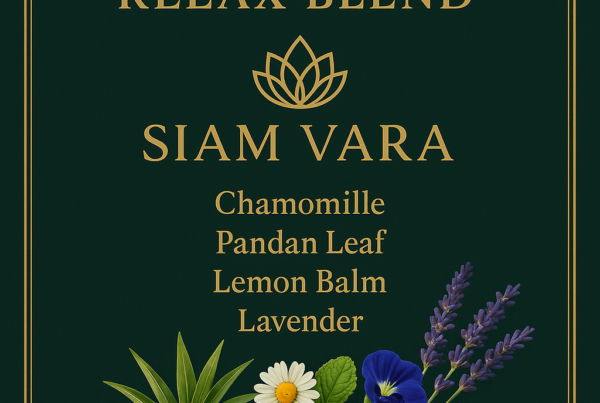
A caffeine-free blend is especially useful while traveling, since travelers often end up drinking more coffee or caffeinated tea than usual to cope with early flights, long days of sightseeing, or jet lag itself. Having a dedicated evening blend that you know is caffeine-free removes any guesswork about whether it might interfere with your ability to sleep in an already unfamiliar bed. A calming five-herb combination, like the one found in Siam Vara’s pyramid tea bags, brewed the same way every night of a trip, can become a small, portable piece of consistency amid an otherwise unpredictable schedule.
Ultimately, the value of bringing tea on the road is less about the tea itself and more about what it represents: a small, familiar ritual you can carry with you no matter where you are. Travel already asks a lot of flexibility from us, and having one reliable evening habit that does not depend on your surroundings can offer a genuine sense of continuity. Whether you are in a business hotel, a rented apartment, or a friend’s guest room, a few quiet minutes with a familiar cup of tea can help the day feel a little more complete, wherever in the world that day happens to be ending.