
Tea drinkers can be surprisingly passionate about format, and it is not uncommon to hear someone insist that loose-leaf tea is inherently superior to anything that comes in a bag. But this debate deserves a more nuanced look, particularly now that pyramid-style tea bags have largely closed the gap that once separated bagged tea from its loose-leaf counterpart. Understanding how these formats actually differ, and what genuinely matters for flavor and convenience, can help you choose the right one for your own habits rather than following format snobbery for its own sake.
To understand why format matters at all, it helps to understand a concept tea professionals call infusion, meaning the process by which hot water extracts flavor, aroma, and color from dried plant material. For this process to work well, water needs room to circulate freely around the leaves or botanicals, allowing them to fully unfurl, release their compounds, and steep evenly. This single principle, water circulation, is really at the heart of the entire format debate.
Where Flat Tea Bags Fall Short
Traditional flat, rectangular paper tea bags, the kind that have dominated supermarket shelves for decades, are generally filled with very finely broken tea or herb particles, sometimes called “fannings” or “dust” in the industry. This fine grind is used partly because it fits into a small, flat bag and partly because it brews quickly, which suits mass-market convenience. The tradeoff is that these small particles are tightly packed with very little room to move, which restricts water circulation and can lead to a flatter, less nuanced flavor. Fine particles also tend to release their compounds very quickly and can turn bitter if oversteeped, since there is less structural material to moderate the extraction.
Loose-leaf tea sits at the opposite end of the spectrum. Because the leaves or dried botanicals are not confined by a bag at all, they have complete freedom to expand and move in the water, typically brewed in a teapot, infuser basket, or strainer. This generally allows for a fuller, more complete infusion and lets you see and appreciate the whole leaves or flowers themselves, which many tea enthusiasts find part of the pleasure. The tradeoff is practical: loose-leaf tea requires a separate infuser or strainer, a bit more cleanup, and a little more hands-on attention, which is not always realistic for a quick cup on a busy morning or at an office desk.
Why Pyramid Tea Bags Bridge the Gap
Pyramid-style tea bags were developed specifically to close this gap between convenience and quality. Made from a fine, food-safe mesh material rather than flat paper, a pyramid bag has genuine three-dimensional volume, giving the dried herbs and flowers inside room to expand, move, and circulate in hot water in a way that mimics loose-leaf brewing far more closely than a flat bag ever could. This shape also means pyramid bags can hold larger, whole, or coarsely cut pieces of botanical material rather than fine dust, since there is enough internal space to accommodate them.
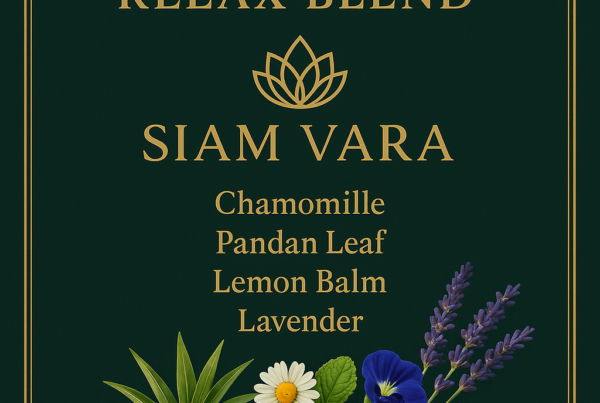
The result is a format that offers much of loose-leaf tea’s flavor and aroma benefit while retaining the everyday convenience that made bagged tea popular in the first place: no infuser needed, no loose leaves to strain out, and simple, mess-free cleanup afterward. This is why so many quality-focused tea brands, including herbal blend makers, have moved toward pyramid bags rather than flat paper ones. A blend like Siam Vara’s Sleep & Relax Blend, containing chamomile, pandan leaves, lemon balm, butterfly pea, and lavender, uses pyramid tea bags for exactly this reason: the format gives whole dried botanicals the room they need to brew properly while keeping preparation as simple as steeping one bag in a cup.
Does format really matter, then? For everyday practicality, yes, but perhaps not in the way format purists suggest. The old, sharp divide between “premium loose leaf” and “convenient but mediocre bagged tea” has softened considerably with the rise of well-made pyramid bags. Someone who wants the ritual of using a teapot and infuser, and who does not mind the extra cleanup, may still prefer true loose-leaf tea, and there is nothing wrong with that preference. But for the vast majority of people looking for a genuinely good cup without extra equipment, a quality pyramid tea bag offers a meaningfully better brewing experience than old-fashioned flat bags, without asking for any extra effort in return.
The real lesson here is that format is not simply a binary choice between “bagged” and “loose”; it is a spectrum, and where a given product sits on that spectrum, whether it is fine dust in a flat bag or whole botanicals in a spacious pyramid, matters more to the final cup than the loose-versus-bagged label alone. Paying attention to that distinction, rather than assuming all tea bags are created equal, is a small piece of knowledge that can meaningfully improve your everyday cup.