
Long before the phrase “wellness culture” existed, Thai households were already steeping leaves, flowers, and roots in hot water for comfort, warmth, and quiet restoration. Herbal infusions have been part of everyday Thai life for generations, not as a trend but as a practical habit passed down through families. A pot of something fragrant simmering on the stove was simply part of how a home felt lived-in and cared for.
Thai herbal tradition has long held that what grows in the garden can also nourish the body in gentle, everyday ways. Rather than being confined to formal medicine, this knowledge lived in kitchens and backyards, where grandmothers and mothers knew which leaf to pluck for a restless evening or which flower to dry for the next rainy season. This kind of knowledge rarely came from textbooks; it was observed, remembered, and shared by word of mouth.
Much of this tradition grew from Thailand’s remarkably fertile landscape. The country’s warm, humid climate and diverse regions—from northern hillsides to central plains to southern coastlines—support an enormous range of aromatic plants. It made sense that a culture surrounded by such botanical abundance would naturally weave plants into daily rituals, including the simple act of making a warm drink at the end of the day.
Herbal drinks in Thailand were never just about flavor. They were tied to rhythm and routine—a way of marking transitions in the day, such as the shift from a busy afternoon into a calmer evening. Sharing a warm drink was also a social gesture, offered to visitors as a sign of welcome and thoughtfulness, a custom that still echoes in Thai hospitality today.
A Culture Built on Observation, Not Prescription
What makes Thai herbal culture distinct is its informality. Unlike rigid medical systems, it developed as a living, evolving body of household knowledge. Families noticed which plants had a calming aroma, which ones felt soothing after a long day, and which combinations simply tasted pleasant together. Over time, certain herbs became closely associated with rest and unwinding, not because of any single formal doctrine, but because generations of quiet, everyday use reinforced their place in the evening routine.
This is also why Thai herbal tea culture feels so personal and regional. A blend favored in one village might differ slightly from one enjoyed a few provinces away, shaped by whatever grew nearby and whatever a particular family preferred. This diversity is part of the charm—there was never one “correct” way to make an herbal drink, only traditions that felt right to the people practicing them.
From Loose Herbs to Modern Rituals
As Thailand modernized, so did the way people prepared these drinks. Loose dried herbs, once measured by hand and steeped in clay pots, gradually gave way to more convenient formats suited to busy modern life. Yet the underlying spirit remained the same: a warm, fragrant pause built into the day, ideally in the hours before sleep.
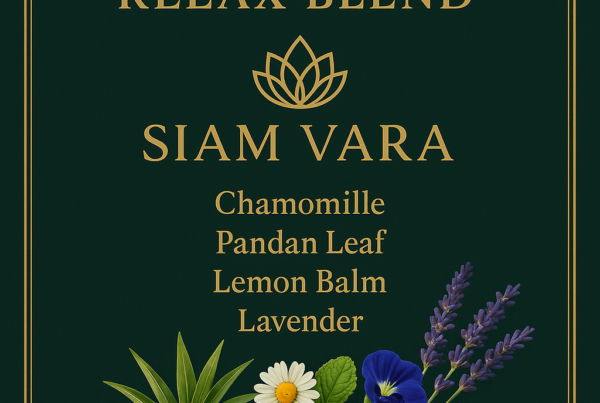
Today, brands rooted in this heritage are reinterpreting these old habits for a global audience. Siam Vara, for instance, draws on this same lineage of home-brewed comfort, blending chamomile, pandan, lemon balm, butterfly pea, and lavender into a caffeine-free pyramid tea bag designed for the evening wind-down. It is less an invention than a continuation—a modern expression of a tradition that has quietly existed in Thai homes for a very long time.
Understanding this history offers a richer way to appreciate a cup of herbal tea. It is not simply a beverage; it is a small thread connecting a contemporary evening ritual to generations of Thai households who understood, long before wellness became a buzzword, that a warm cup and a quiet moment could be a meaningful part of caring for oneself.