
Caffeine is one of the most well-studied and widely consumed stimulants in the world, and its relationship with sleep is fairly well understood: caffeine blocks adenosine, a chemical that builds up in the brain throughout the day and promotes the feeling of sleepiness. This is precisely why so many sleep guidelines recommend avoiding caffeine in the afternoon and evening — even if you don’t feel overtly “wired,” caffeine consumed too late in the day can interfere with your ability to fall and stay asleep, sometimes without you even realizing the connection.
This is where caffeine-free herbal teas occupy a distinct and useful place in an evening routine. Unlike black, green, white, or oolong tea — all of which are made from the Camellia sinensis plant and naturally contain caffeine — true herbal teas, or “tisanes,” are made from a variety of dried flowers, leaves, and herbs that contain no caffeine at all. This includes common evening blends featuring chamomile, lemon balm, lavender, and similar botanicals.
The most straightforward benefit of a caffeine-free tea in the evening, then, is simply what it avoids rather than what it adds: it removes the risk of an unwanted stimulant disrupting your sleep later in the night. This matters more than people often realize, because caffeine has a relatively long half-life in the body — for many adults, roughly half of the caffeine consumed can still be present in the bloodstream five or six hours later. A cup of regular tea or coffee in the late afternoon can, for some people, still be affecting their body well into the evening.
What About the Herbs Themselves?
Beyond simply being caffeine-free, several of the herbs commonly found in evening tea blends have a long history of traditional use for relaxation, and some have been the subject of preliminary scientific interest. Chamomile, for example, is one of the most extensively studied calming herbs, and some research suggests it may have mild soothing properties, which is part of why it has been used in traditional wellness practices for centuries. Lemon balm has similarly been explored for its potential calming effects, and lavender is well known for its association with relaxation, both in aroma and in tea form.
It’s important to be precise about what this evidence does and doesn’t show. Much of the existing research on these herbs is preliminary, involves small groups of participants, or focuses on general feelings of calm rather than clinically significant changes to sleep disorders. These herbs should not be understood as a treatment for insomnia or any diagnosed sleep condition, and they are not a substitute for medical or psychological care when sleep difficulties are persistent or severe. What the evidence more modestly suggests is that many people find these herbs subjectively soothing, and that the ritual of preparing and drinking a warm, caffeine-free tea can be a genuinely pleasant part of an evening routine.
This distinction — between “may help support relaxation” and “will fix your sleep” — is an important one to hold onto. Sleep is influenced by dozens of factors, including stress, light exposure, physical activity, room temperature, and underlying health conditions. A cup of herbal tea is a small, supportive piece of that picture, not a cure-all.
Choosing a Tea for the Evening
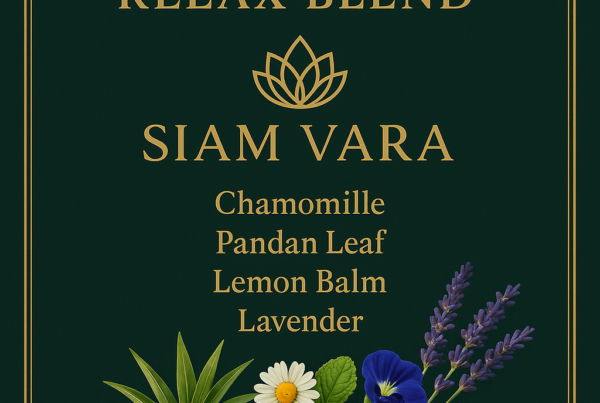
If your goal is specifically to support an evening routine, the most important criterion is simple: choose something genuinely caffeine-free, rather than assuming all “tea” fits that description. Checking the ingredient list is worthwhile, since some blended teas combine herbal ingredients with actual tea leaves, which would reintroduce caffeine. A pure herbal blend — like a caffeine-free mix of chamomile, pandan leaves, lemon balm, butterfly pea, and lavender — avoids this issue entirely.
Beyond caffeine content, personal preference matters more than any specific ingredient. Some people prefer the more floral notes of chamomile and lavender, while others enjoy the subtle, slightly sweet aroma that pandan leaves can bring to a blend. There is no single “correct” evening tea; the best choice is the one you genuinely enjoy drinking and are likely to make part of your routine consistently.
In the end, the evidence around caffeine-free tea and sleep points less toward a dramatic physiological effect and more toward a sensible, low-risk addition to an evening routine — one that avoids the pitfalls of late-day caffeine, offers a pleasant ritual, and, for many people, simply feels like a comforting way to close out the day.