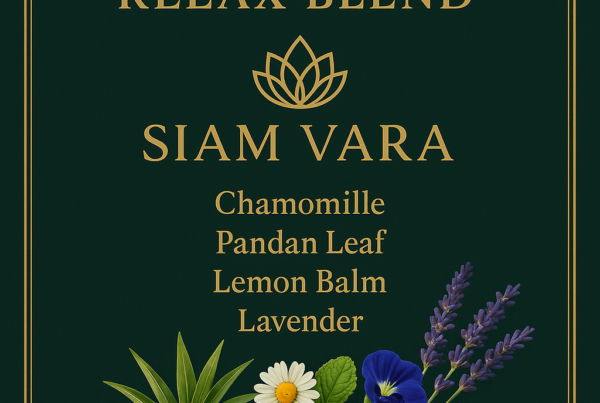

Not all herbal teas are created equal when it comes to winding down in the evening. While almost any caffeine-free tea can technically be sipped before bed, a truly well-crafted bedtime blend involves more intention — a thoughtful pairing of herbs chosen for their traditional associations with calm, their complementary flavors, and how well they work together in both aroma and taste. Looking at a blend built from five distinct botanicals — chamomile, pandan, lemon balm, butterfly pea, and lavender — offers a useful lens into what actually makes a bedtime herbal tea work.
The first principle of a good bedtime blend is that every ingredient should be naturally caffeine-free. This might sound obvious, but many popular “relaxing” teas on store shelves are actually blended with green or black tea leaves, which contain caffeine and can work against the very goal of winding down. A genuine bedtime blend, like one built around chamomile, pandan, lemon balm, butterfly pea, and lavender, sidesteps this issue entirely — none of these five herbs contain caffeine, making the blend suitable to enjoy right up until bedtime without worrying about it interfering with a restful night.
Balancing Flavor: Sweetness, Florality, and Brightness
A well-designed herbal blend isn’t just a random assortment of calming herbs thrown together — it’s a balance of complementary flavor roles. In a five-herb blend like this one, each botanical tends to contribute something different. Chamomile offers a soft, honeyed sweetness that acts as a gentle base note. Pandan brings a warm, vanilla-like sweetness and a slightly grassy depth that grounds the blend. Lemon balm contributes brightness and a citrusy lift that keeps the cup from tasting flat or overly floral. Butterfly pea adds a mild, subtly earthy character along with its signature blue color, while lavender rounds things out with a distinctive floral aroma used in smaller amounts to avoid overpowering the other flavors.
This kind of layered flavor building is part of what separates a thoughtfully composed blend from a single-note tea. Drinking a cup made from five different botanicals means experiencing a more complex, evolving flavor profile — sweet, floral, citrusy, and earthy notes all working together — rather than the flatter, one-dimensional taste of a single herb steeped alone. It also means the tea can appeal to a broader range of palates, since there’s more going on to enjoy with each sip.
Beyond flavor, visual and aromatic appeal matter too. Butterfly pea’s natural blue hue gives the blend a distinctive look that sets it apart from typical amber or golden herbal teas, while the combined aroma of chamomile, lavender, and pandan creates a fragrance that’s genuinely inviting to breathe in as the tea steeps. These sensory details matter more than they might seem — the ritual of making tea is as much about the experience leading up to the first sip as it is about the taste itself.
Tradition, Not Trend: Rooted in Long-Standing Herbal Use
What makes a blend like this particularly interesting is that each of its five herbs comes with its own long, independent history of traditional use. Chamomile has centuries of use across Europe and the Mediterranean as a calming evening herb. Pandan has been a beloved fixture of Thai and Southeast Asian kitchens for generations, tied to comfort and home cooking. Lemon balm has a long-standing place in European herbal tradition as a soothing, mood-lifting plant. Butterfly pea carries deep roots in Thai culinary and herbal culture. And lavender has been associated with relaxation and aromatherapy for thousands of years across Mediterranean and European traditions.
Bringing these five traditions together into a single blend — as seen in products like Siam Vara’s Sleep & Relax pyramid tea bags — reflects a kind of thoughtful curation: taking herbs that have each independently earned a reputation for calm across different cultures and combining them into one cohesive, evening-appropriate cup. It’s worth being clear that this blend, like any herbal tea, is a lifestyle product rooted in tradition rather than a medical treatment — no herbal tea can cure insomnia or treat anxiety, and it should never replace professional medical advice. But as part of a broader wind-down routine, a well-balanced blend like this can be a genuinely pleasant, comforting ritual to look forward to each evening.
Finally, a good bedtime blend should be easy to prepare and enjoy without fuss. Pyramid tea bags, for example, allow whole or coarsely cut herbs enough room to unfurl and release their full aroma and flavor, offering a more satisfying steep than tightly packed flat bags. Simplicity in preparation matters just as much as the ingredients themselves — a bedtime tea should feel like an effortless part of winding down, not another task added to an already long day.